








How NRIs Can Buy Property in Tamil Nadu: The Step-by-Step FEMA Compliance Guide
- Category: NRI Guides
- Published:May 2026
- Reading Time:6 Minutes
Buying Property in Tamil Nadu as an NRI
Tamil Nadu continues to attract Non-Resident Indian buyers looking for a family home, retirement property, rental asset, or long-term investment.
Cities such as Chennai offer established infrastructure, employment opportunities, educational institutions, healthcare facilities, and a wide range of residential options.
However, NRIs must follow the applicable rules under the Foreign Exchange Management Act, commonly known as FEMA, while purchasing property in India.
Can an NRI Buy Property in Tamil Nadu?
An NRI can generally purchase residential and commercial immovable property in India without obtaining prior approval from the Reserve Bank of India.
However, an NRI cannot ordinarily purchase:
- Agricultural land
- Plantation property
- A farmhouse
These restricted property categories may require specific permission or may only be acquired under permitted inheritance provisions.
Step 1: Confirm Your NRI Status
Before beginning the purchase, confirm your residential status under FEMA.
FEMA residential status and income-tax residential status are determined under different rules. Your classification may affect:
- Permitted payment routes
- Bank accounts used
- Tax treatment
- Repatriation of sale proceeds
- Documentation requirements
Consult a qualified chartered accountant or FEMA professional when your residency situation is complex.
Step 2: Decide the Type of Property
NRIs may generally purchase:
- Apartments
- Villas
- Independent houses
- Residential plots permitted under local regulations
- Commercial offices
- Retail or other permitted commercial properties
Before paying an advance, confirm that the property is not classified as agricultural land, plantation property, or a farmhouse.
Step 3: Choose a Legally Compliant Property
Conduct detailed legal verification before finalising the property.
Important checks include:
- Seller’s title and ownership history
- Encumbrance Certificate
- Parent documents
- Approved building plan
- Planning permission
- RERA registration, where applicable
- Property tax receipts
- Completion or occupancy certificate for completed projects
- Patta and other applicable revenue records
- Access-road rights
- Pending litigation or mortgages
For projects under construction, verify the developer, approvals, construction progress, possession schedule, and registered sale documentation.
Step 4: Open the Appropriate Bank Accounts
NRIs commonly use the following accounts for property-related payments:
NRE Account
An NRE account is generally used for eligible foreign income remitted to India. Subject to applicable rules, the funds are repatriable.
NRO Account
An NRO account is generally used to manage income earned in India, including rent and other domestic receipts.
FCNR Account
An FCNR account allows eligible foreign-currency term deposits to be maintained in India.
Speak with your authorised dealer bank to determine the appropriate account and payment route for your transaction.
Step 5: Remit Funds Through Permitted Banking Channels
Property payments should be made through authorised banking channels.
NRIs may generally pay using:
- Inward remittance from overseas
- Funds held in an NRE account
- Funds held in an NRO account
- Funds held in an FCNR account
- A permitted Indian home loan
Avoid unrecorded cash payments or informal transfer arrangements. Maintain a clear banking trail for every payment.
Step 6: Arrange an NRI Home Loan, If Required
NRIs can apply for home loans from eligible Indian banks and housing-finance institutions.
Lenders may ask for:
- Passport
- Valid visa or residence permit
- Overseas address proof
- PAN
- Indian address proof, where available
- Employment contract
- Salary slips
- Overseas bank statements
- Income-tax documents
- Credit report
- Power of Attorney
- Property documents
Loan eligibility, margin contribution, interest rates, tenure, and repayment conditions vary between lenders.
Step 7: Provide a Power of Attorney When Necessary
An NRI who cannot travel to India for every stage may appoint a trusted person through a Power of Attorney.
Depending on its scope, the representative may be authorised to:
- Sign selected documents
- Coordinate with the developer
- Submit loan papers
- Attend registration
- Take possession
- Manage the property
The Power of Attorney may need notarisation, apostille or consular attestation, stamping, and adjudication in India. Obtain legal advice before preparing or using it.
Step 8: Review the Agreement Before Signing
Before signing an Agreement for Sale or Sale Deed, verify:
- Total property consideration
- Payment schedule
- Applicable taxes
- Possession date
- Construction specifications
- Amenities
- Common-area rights
- Undivided share of land, where applicable
- Maintenance charges
- Parking allocation
- Delay and cancellation clauses
- Refund conditions
- Dispute-resolution terms
Do not rely only on marketing material. Ensure that all agreed commitments appear in the signed documents.
Step 9: Complete Tax and TDS Requirements
Tax Deducted at Source may apply when purchasing immovable property, depending on factors such as the seller’s residential status, transaction value, and the law applicable on the payment date.
The compliance process differs when the seller is:
- A resident Indian
- An NRI
- Another non-resident entity
Because India’s tax framework and prescribed forms may change, buyers should obtain advice from a chartered accountant before releasing payment. The Income Tax Department provides online facilities and guidance for property-related TDS compliance.
Step 10: Register the Property
The Sale Deed must be registered with the appropriate Sub-Registrar Office in Tamil Nadu.
The process generally includes:
- Payment of stamp duty
- Payment of registration charges
- Identity verification
- Execution of the Sale Deed
- Submission of supporting documents
- Biometric or photographic verification, where required
- Registration in the buyer’s name
Charges depend on the property, transaction, and prevailing Tamil Nadu rules. Confirm the latest amount before registration.
Step 11: Complete Post-Purchase Documentation
After registration, complete the applicable ownership updates.
These may include:
- Patta transfer
- Property-tax name transfer
- Electricity-service name transfer
- Water or utility transfer
- Association registration
- Maintenance records
- Insurance
- Possession documentation
Store digital and physical copies of every agreement, receipt, bank advice, tax filing, approval, and registered document.
Step 12: Understand Rental Income and Repatriation
NRIs may generally rent out permitted residential or commercial property in India.
Rental income may be credited to an NRO account and will be subject to applicable Indian tax rules.
Repatriation of sale proceeds depends on how the property was acquired, the source of funds, taxes paid, documentation, and RBI regulations. RBI rules permit repatriation in eligible cases, subject to conditions and prescribed limits.
Consult your authorised dealer bank and tax adviser before selling or transferring funds overseas.
Essential NRI Property-Buying Checklist
Keep the following ready:
- Passport
- Visa or overseas residence proof
- PAN
- NRE, NRO or FCNR account details
- Overseas and Indian address proof
- Recent photographs
- Income documents
- Power of Attorney, when required
- Home-loan approval
- Title-verification report
- RERA and statutory approvals
- Agreement for Sale
- Payment receipts
- TDS records
- Registered Sale Deed
- Possession and handover documents
Final Thoughts
Buying property in Tamil Nadu as an NRI can be a smooth process when every step is documented and completed through approved channels.
Begin by selecting a legally compliant property, verify the title and approvals, use the correct bank account, maintain a clear payment trail, and complete all registration and tax requirements.
FEMA, tax, banking, and registration rules may change. Before completing the transaction, obtain advice from a qualified property lawyer, chartered accountant, and authorised dealer bank.
With proper planning and professional verification, NRIs can invest in Tamil Nadu with greater clarity and confidence.
Recommended Reads

Real Estate Trends
Why Chennai is the Next Big Real Estate Hotspot in Tamil Nadu
Infrastructure growth, affordability, and proximity to Chennai are driving unprecedented interest among first-time buyers and investors alike.

Finance Tips
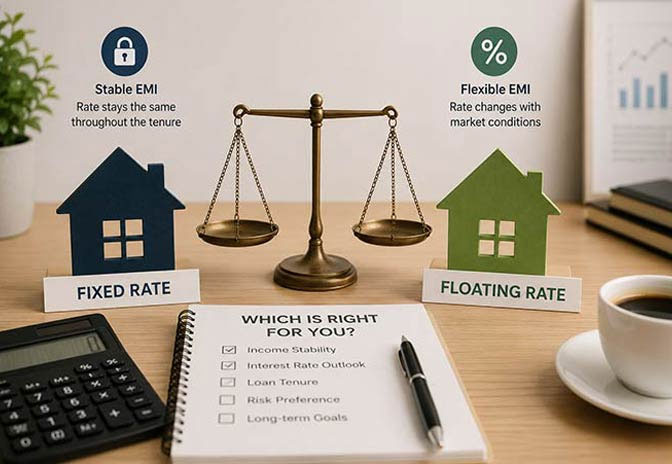
Fixed vs. Floating Rate Home Loans in 2026: Which Should Chennai Buyers Choose?
With RBI rates expected to ease in H2 2026, floating rate loans currently offer better value for most profiles. Here's how to decide.